T-Mobile, the US mobile carrier that is SpaceX’s partner on satellite texting, has publicly poured cold water on SpaceX’s plan to turn Starlink into a full-blown mobile network. PCMag published a report on 9 October 2026 headlined “T-Mobile CTO Gives SpaceX a Reality Check on Its Starlink Mobile Ambitions”, following earlier remarks from the carrier’s outgoing finance chief and a Bank of America note that drew on talks with T-Mobile’s technology chief.
The two earlier reports name different executives: Yahoo Finance attributed the dismissal to outgoing chief financial officer Peter Osvaldik, while AOL reported that Bank of America analyst Matthew Griffiths reached his conclusions after discussions with T-Mobile chief technology officer John Saw.
Key facts
- Osvaldik said SpaceX’s cellular plan is “not a competitive threat from a wireless perspective, at all”, speaking at Citi’s 2026 Global TMT Conference, according to Yahoo Finance.
- He estimated SpaceX would need more than a billion femtocells to match outdoor coverage, and said the cost of building a ground network would have to exceed $100 billion, Yahoo Finance reported.
- Bank of America put the femtocell requirement at between 500 million and 1.5 billion nationwide, at nearly $1,000 each, AOL reported.
- SpaceX acquired EchoStar spectrum, opening the door to a broader mobile offering beyond satellite broadband and direct-to-cell, according to AOL.
- SpaceX ended the second quarter with 12 million Starlink subscribers, double the prior-year total, AOL reported.
Why it matters
SpaceX has said it wants Starlink Mobile to compete directly with the big three US carriers, not just fill in dead zones. The pushback from T-Mobile executives and from Bank of America is about whether that is physically and financially possible in the next few years. AOL reported that Bank of America sees the wireless push as credible but likely to require far more terrestrial infrastructure, industry cooperation and time than SpaceX investors currently expect.
The femtocell argument
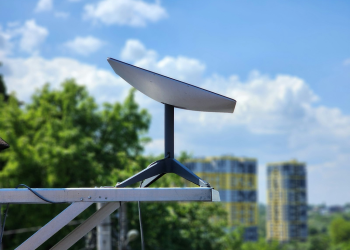
The dispute centres on femtocells — miniature, low-power cellular base stations. Yahoo Finance reported that SpaceX President Gwynne Shotwell told an earnings call the company could put a cellular base station on the same gear that holds a Starlink broadband dish, creating “little femtocells” around the country. Yahoo Finance said details were sparse, and that the appeal is covering indoors and dense urban areas, where satellites struggle to connect.
Osvaldik was unconvinced, citing interference and backhaul problems and telling the Citi conference the plan is “just not fathomable”, per Yahoo Finance. The same report quoted Earl Lum, founder of EJL Wireless Research, telling Light Reading the idea ranks among the three dumbest he has seen in four decades in the industry, and said Lum argued femtocells would not provide indoor coverage beyond a person’s own home.
Crown Castle, the US tower operator, told Bank of America that femtocells are better suited to filling isolated coverage gaps, and that broader service would still need towers, permitting support, power and fibre, AOL reported. AOL added that Bank of America’s view is that Starlink is more likely to complement terrestrial networks than replace them, and that matching established carriers would take thousands of towers and small cells, energy, fibre, leases, zoning approvals and multiple years of construction.
What SpaceX says
SpaceX’s own executives have been far more bullish. Shotwell said she expects Starlink to take “quite a few” customers from T-Mobile, AT&T and Verizon because the service will be better, according to both AOL and Yahoo Finance. SpaceX chief financial officer Bret Johnsen told the Goldman Sachs 2026 Communacopia and Technology Conference that Starlink Mobile promises to eliminate cellular dead zones and offer global roaming, and that this is why the big three operators were a little concerned, Yahoo Finance reported. Johnsen also said the wireless industry has stagnated and been starved of innovation.
Yahoo Finance noted the irony that T-Mobile is SpaceX’s partner on the current version of Starlink Mobile, while playing down the satellite connectivity. The upgrade path runs through a new generation of mobile satellites, and the spectrum behind the plan still needs FCC approval.
The numbers behind the push
AOL reported that SpaceX’s first public earnings report showed quarterly sales up almost 50% to $7.81 billion, citing Reuters. Its Connectivity segment, which AOL calls the closest proxy for Starlink, generated $4.29 billion in second-quarter sales, up 66% year over year and 54.9% of the total, against $2.56 billion from AI and $962 million from launches. Starlink produced $1.66 billion in operating profit while the AI business lost about $1.26 billion and SpaceX posted a $541 million net loss, AOL said.
AOL also reported that SpaceX shares were down 6.9% year-to-date through 26 August, at around $139.63, some 38% below a June record of $225.64, and that the stock trades at over 1,585 times forward non-GAAP earnings. Bank of America is not predicting failure, AOL said, but is questioning how much of Starlink’s status as a potential national carrier disruptor is already priced in.
Where international users come in
The coverage estimates in both reports are US-specific, covering what it would take to match a nationwide American carrier. For users outside the US, the figure that stands out is pricing: AOL reported that average monthly sales per Starlink subscriber fell 22% to $66 as SpaceX expanded through cheaper international plans, which is also the backdrop to what the extra 65 MHz could mean for satellite internet prices. AOL said that shift makes enterprise, government, aviation and maritime customers more important, with Musk expecting enterprise sales to substantially exceed consumer revenue. AOL also reported Musk’s claim, via GeekWire, that Starlink might deliver a majority of the world’s internet in less than 10 years.
Frequently Asked Questions
What can the current version of Starlink Mobile actually do?
According to Yahoo Finance, the service SpaceX runs today with T-Mobile uses more than 600 satellites and supports texting, data for selected mobile apps and even video calls. Yahoo Finance adds that bandwidth on the service is constrained.
How fast is the next-generation Starlink Mobile supposed to be?
Yahoo Finance reported that SpaceX plans to launch a larger constellation of newer satellites designed to deliver 5G performance with download rates of up to 150Mbps. The same report says SpaceX President Gwynne Shotwell expects the resulting service to be better than what the three major US carriers offer.
How much did SpaceX pay for the EchoStar spectrum?
AOL reported that SpaceX acquired 65 megahertz of EchoStar spectrum for $19.6 billion, citing LightReading. Yahoo Finance describes the same airwaves as coming from Boost Mobile’s parent, EchoStar, and says T-Mobile’s CFO still argues SpaceX lacks the spectrum needed to compete with the major US carriers.
What should investors watch next, according to Bank of America?
AOL reported that investors should look out for tower-leasing agreements, carrier partnerships, new spectrum purchases and direct-to-device revenue disclosures. The same report says growing enterprise sales and stable Starlink margins would strengthen the case, while heavy terrestrial spending without matching subscriber growth would weaken it.
Follow Starlink News on Google. Make us a preferred source to see more of our reporting in Google search results.









![Using Your Own Router with Starlink: Bypass Mode [2026]](https://starlink-news.com/wp-content/uploads/2026/09/using-your-own-router-with-starlink-bypass-mode-20-f6c09f95-120x86.png)