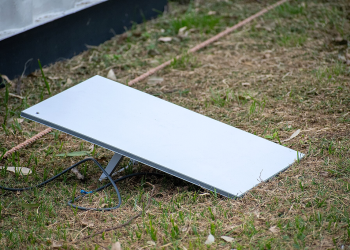
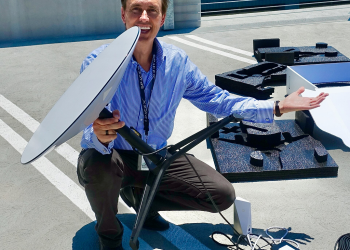
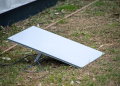
Telkom, South Africa’s state-controlled telecoms operator, has signed an agreement to distribute Amazon Leo satellite broadband in South Africa, the company said on Tuesday 17 November, according to DNE Africa. Openserve, Telkom’s wholesale network arm, signed on behalf of the group and will aim the service at mines, farms, clinics and small businesses beyond the reach of Telkom’s fibre and mobile networks.
Key facts
- Openserve will sell Amazon Leo — Amazon’s low Earth orbit (LEO) network, formerly known as Project Kuiper — to enterprises and eligible public-sector customers, directly and through sales agents, and will remain the service provider to those customers.
- Maximum configured speeds can reach 1Gbps for downloads and 400Mbps for uploads, depending on the plan and terminal, Telkom said.
- Telkom gave no prices and no launch date.
- Telkom is the second South African distributor of the network, after Herotel, which signed its deal in July.
- Because Herotel and Telkom hold South African licences and remain the service providers, Amazon Leo does not need a licence of its own from Icasa, the Independent Communications Authority of South Africa — a route SpaceX’s Starlink has not taken.
- Two days before the announcement, on 15 November, a United Launch Alliance Vulcan rocket failed in flight and destroyed 40 Amazon Leo satellites, Reuters reported.
Why it matters
Fibre networks in South Africa are concentrated in cities and suburbs, and operators have long struggled to justify the cost of building lines to small, scattered rural communities and remote work sites, DNE Africa reported. Reselling satellite internet capacity gives Telkom a way to serve those customers without laying new cable.
That matters more because the group is spending less. Telkom’s interim results last week showed fibre spending down by a third, and MTN is weighing a cash offer for Telkom.
What Openserve will sell
Openserve will use Amazon Leo where fibre, mobile or fixed-wireless links lack the coverage, capacity or resilience a customer needs, Telkom said, and as a backup path for sites that already have a terrestrial connection. The agreement also covers satellite backhaul for fixed cellular sites, as either the primary or the backup link.
Two other parts of the group are involved. BCX, Telkom’s IT services business, will bundle the service with its managed network, cloud and cybersecurity products, while Telkom Business will offer it to small firms in rural and remote areas. Named target sectors run from mining, agriculture and energy to construction, logistics, tourism and qualifying public bodies in health and education.
On my reading of the announcement, there is no launch customer in it. Telkom’s statement does not name a single mine, farm, clinic or work site already signed up, gives no figure for how many sites are in the pipeline, and does not identify the sales agents that will resell the service. “Connectivity should not depend on where you happen to work,” chief executive Serame Taukobong said in the statement.
The price question
Neither South African distributor has published a rate. Telkom gave speed ceilings and no tariffs; Herotel has not costed the household service it says will follow. Starlink provides no local benchmark either, because without an Icasa licence it cannot sell in South Africa at all, so there is no local list price to measure the Amazon service against — Starlink’s published prices run only in the markets where Starlink is available — and neither report cited here gives a regional figure. Enterprise satellite internet is quoted per plan and per terminal, as Telkom’s own caveat on its speed figures implies. Whether Openserve publishes a tariff before it names a launch date is an open question; the company has not said.
Why Starlink is still shut out
Icasa’s licensing rules require 30% ownership by historically disadvantaged groups. SpaceX has refused to cede equity and has instead pushed for an “equity-equivalent” option, under which a company invests in local skills or projects instead. Elon Musk has said Starlink is kept out because he is not black, a claim the government rejects.
Communications minister Solly Malatsi issued a policy direction allowing equity-equivalent programmes. TechCentral reported that Icasa wrote back to him in May saying it could not give that direction full effect without parliament amending the Electronic Communications Act, the law under which the regulator issues licences — leaving the ownership threshold in place regardless of the minister’s preference. The dispute resurfaced this week when President Cyril Ramaphosa, speaking in California, said Musk must meet South Africa’s rules like any other company. It is one of several licensing fights in other markets holding up Starlink service.
Amazon has taken the distributor route rather than seeking its own authorisation, and has also filed technical submissions with Icasa, including comments on the draft national radio frequency plan, DNE Africa reported.
A costly week for Amazon’s constellation
The commercial win in South Africa followed the launch failure of 15 November. Reuters first reported the loss of the 40 satellites; the flight sequence was detailed by Militarnyi (Мілітарний), a Ukrainian defence and aerospace outlet that tracks launch programmes and which cited Reuters and company statements. The anomaly struck about 10 minutes after liftoff from Cape Canaveral, after the rocket’s second stage had separated from the first.
It was the first failed mission in the history of United Launch Alliance, the Boeing-Lockheed Martin joint venture, and the fifth Vulcan flight since the rocket’s 2024 debut. The technical investigation is expected to ground Vulcan for several months and delay the rocket’s Pentagon certification.
That deepens a shortage of launch vehicles in the US market, which Militarnyi linked to other incidents and to SpaceX’s decision to stop accepting new orders for Falcon 9 rockets ahead of their retirement. The outlet also cited a New Glenn explosion on the launch pad in May among the third-party failures complicating Amazon’s schedule.
Amazon’s network remains far behind the market leader: Starlink already has more than 11,000 satellites in orbit and serves millions of customers worldwide. In South Africa, though, Amazon now has two licensed distributors and Starlink has none.
Frequently Asked Questions
How many Amazon Leo satellites are in orbit, and how many are planned?
Amazon has launched 398 Amazon Leo satellites across 14 missions since 2025, roughly 12% of the planned network, Militarnyi reported. The company intends to deploy 3,236 satellites in low Earth orbit for global coverage.
Why does low Earth orbit matter for users far from fibre?
Satellites in low Earth orbit fly a few hundred kilometres up, far closer than traditional geostationary satellites, DNE Africa reported. That shorter distance cuts delay and makes services such as video calls usable.
When is an Amazon Leo consumer service expected in South Africa?
Herotel, the first South African distributor, signed in July, and its deal was reported to be aimed at households under a new brand with commercial launch expected in 2027, per DNE Africa.
Has Amazon Leo started commercial service yet?
The two reports frame this differently. DNE Africa, citing CNBC, says Amazon stated in July that it had launched enough satellites to begin service; Militarnyi says repeated launch delays are complicating Amazon’s plans to begin offering basic internet services as early as this year.