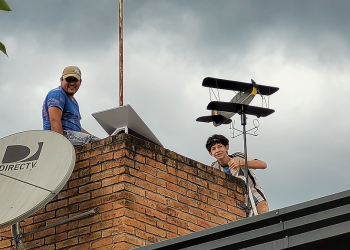
Starlink’s cheapest home plan in the United States now costs $55 a month, $44 less than the $99 SpaceX charged when it opened its public beta in October 2020, technology site Engadget reported in a price comparison published on Monday. The same review says SpaceX raised its residential rates twice during 2026, so the saving sits alongside a year of increases rather than a straight-line decline.
Key facts
- At the October 2020 beta, Engadget says, the kit cost $499 and the subscription $99 a month — an initial outlay of $598 excluding shipping and taxes, and a first-year total of $1,687 including equipment.
- The service now has three US residential tiers: Residential 100 Mbps at $55, Residential 200 Mbps at $85 and Residential Max at $130, each with unlimited data.
- SpaceX raised those three prices by $5, $5 and $10 in May 2026, Engadget reports.
- Further changes followed in October 2026, set by location. Some Residential Max customers were told their bills would rise to $156 a month; others were told theirs would fall.
- Enterprise satellite internet in 2026 runs from $55 a month for a basic remote-site data package to $20,000 a month for unlimited global business aviation connectivity, according to industry site Telecom Lead.
Why it matters
For readers comparing satellite internet with fixed-line options, the two reports set out what the service actually bills rather than what it advertises. Engadget says Starlink can be more expensive than cable, fiber or 5G home internet, and that availability rather than price is where the value lies. Read side by side, the two reports also show that $55 entry point doing double duty: it is both Engadget’s cheapest US home subscription and, in Telecom Lead’s enterprise table, the starting price of a 50GB business package.
What the 2020 beta actually bought
SpaceX called its first public beta the “Better Than Nothing Beta,” and Engadget notes the name was accurate: customers were told to expect download speeds of 50 to 150 Mbps, latency of 20 to 40ms and occasional periods of zero connectivity. The $499 kit included the original circular dish, a mounting tripod and a Wi-Fi router.
Those early subscribers owned the equipment they paid for, Engadget says, which is the main structural difference from today. The outlet reports that Starlink introduced a $10 monthly rental fee in June 2026, citing confirmation by Ars Technica, and that the fee was reportedly waived for some new orders in July 2026.
The increases in between
SpaceX lifted the monthly rate to $110 in March 2022, taking effect for existing users that April, according to Engadget. Hardware rose at the same time to $599 for new buyers and $549 for customers holding existing deposits, with the company blaming inflation. By 2023 there were two residential prices: $90 where the network had excess capacity and $120 where capacity was limited.
How the current plans differ
Engadget says the two cheaper residential tiers are locked to speed limits, while Residential Max gets higher network priority and claims speeds of 400 Mbps or higher in suitable conditions. The report adds that PCMag found some new subscribers scoring up to 50 percent off in a promotion running through 30 November 2026.
Where availability sets the price
Neither report publishes a coverage map or waitlist numbers, but both treat availability as a pricing variable. Engadget’s chronology shows Starlink charging by local capacity since at least 2023, and October’s location-based adjustments moved bills in both directions depending on the cell a customer sits in. Between those local rates and the promotions, Engadget says, two customers could end up paying vastly different bills for the same service — a point worth holding onto if you are comparing quotes across borders or against newer satellite hardware. On the enterprise side, Telecom Lead says its figures are tied to a displayed billing market and depend on the billing country, service plan and usage.
Business, mining, maritime and aviation prices
Telecom Lead’s October survey puts Starlink alongside Eutelsat OneWeb, SES, Viasat and Hughes — satellite capacity and connectivity operators — with Speedcast, Marlink and KVH supplying managed services and network integration. It describes Starlink as providing a comparatively transparent subscription benchmark.
On land, Starlink’s business Local Priority packages are listed from $55 for 50 GB to $530 for 2 TB. At $280 a month for 1 TB, Telecom Lead calculates, a mining company connecting 20 remote facilities would pay $5,600 monthly, or $67,200 a year before equipment, installation, cybersecurity and managed services. The site cautions that such a configuration may not meet the needs of operations transmitting continuous industrial video or running critical production systems.
At sea, Telecom Lead calculates that an illustrative $1,150 monthly maritime Global Priority subscription for 1 TB would cost a 100-vessel fleet $115,000 a month, or $1.38 million a year excluding terminals, installation and additional services. In aviation, Starlink’s July 2026 business aviation pricing established three subscription categories advertising maximum downloads of up to 250 Mbps, 500 Mbps and 1 Gbps. Telecom Lead describes those as service-level maximums rather than guaranteed speeds, and estimates that a 20-aircraft fleet on the $12,500 Regional Unlimited package would face $3 million a year in subscriptions alone.
Heavy users may need different equipment entirely. Telecom Lead reports that a Speedcast agreement with survey firm TGS, announced in August 2026, combines Starlink Dedicated Service with OneWeb to move up to 10 TB of seismic data daily. Testing on eight Starlink Performance kits hit peak uploads of about 950 Mbps, three to four times the performance of conventional bonded Global Priority links in the reported comparison.
What this means outside the United States
Both reports stop short of publishing country-by-country figures. Engadget frames today’s entry rate as a US price and says regional pricing applies once promotional rates expire. Telecom Lead states that its numbers are published benchmarks for particular markets and plans, not universal global quotations, and that they exclude equipment, installation, taxes, support and additional data charges. By both outlets’ own disclaimers, then, the figures above are the starting point for a local quote rather than the quote itself — worth checking against local availability before weighing Starlink against rival networks.
Frequently Asked Questions
What happens to rented Starlink equipment if I cancel the service?
Engadget says Starlink still owns rented hardware, and subscribers must return the full kit within 30 days of cancelling their plan or pay its retail price. The outlet reports rentals are offered in several regions, with no upfront cost in select areas.
How much does Starlink Roam cost in 2026?
According to Engadget, the portable Roam service is available at $55 for 100GB of high-speed internet, after which speeds go down. Roam Unlimited, which has no high-speed data cap, costs $175 per month.
Can I lose a Starlink promotional discount?
Engadget reports that subscribers on limited-time promotional rates keep their discounts until the offers expire, after which regional pricing applies. It adds that changing plans during a promotion can also end the discount, and that Starlink says certain discounts last as long as the subscription remains active.
Do managed Starlink services cost extra for shipping fleets?
Yes. Telecom Lead reports that KVH offers managed Starlink maritime connectivity with support packages priced at $49, $169, $349 and $549 monthly, and that these support charges are additional to the underlying satellite connectivity subscription.