Elon Musk said he hopes Tesla will offer built-in Starlink satellite internet in vehicles beyond the Cybercab towards the end of 2027, in a reply on X to David Marcus, the former PayPal president, who had asked for an embedded Starlink option across Tesla’s model range. Musk tied the plan to unsupervised Full Self-Driving (FSD) and, in a later reply, named China as an exception because Starlink is illegal there, according to automotive outlets CarSauce and TeslaNorth.
Key facts
- What Musk said: “Hopefully available towards the end of next year,” he wrote of built-in Starlink, as quoted by CarSauce.
- Status: both outlets stress this is a window Musk hopes for, not a launch schedule Tesla has announced, and neither reports Tesla naming any model or market beyond the China exclusion.
- Availability: neither outlet reports a firmer date than that late-2027 hope, so for car buyers there is still no announced month, model or order option to plan around.
- Unknowns: which vehicles qualify, pricing, subscription arrangements and hardware specifications have not been disclosed.
- Today: the Cybercab is the only Tesla carrying Starlink hardware so far, CarSauce reports.
Dating the exchange
TeslaNorth, which published first, dates its report to 22 November 2026 and says Musk replied that Sunday; CarSauce dates the exchange to 23 November. Neither outlet addresses the gap. On the earlier timestamp alone, 22 November is the safer date to cite; one possible explanation — this article’s inference, not something either outlet states — is that CarSauce’s date reflects its own publication day in a different time zone.
Why it matters: passengers, not the driving system
Musk framed the proposed expansion around what people in the car would be doing, not around autonomy itself. “This will be important for unsupervised FSD, so passengers have high bandwidth everywhere for work and entertainment,” he wrote, in the quote carried by both outlets.
CarSauce notes that his comments do not detail how the driving system itself would use the connection. It defines unsupervised FSD as operation without a driver supervising, as distinct from today’s FSD (Supervised), which requires driver attention and readiness to take over. Read that way, the satellite link is being justified by what passengers do once they stop watching the road — this article’s reading of the quote, not a claim either outlet makes.
The Cybercab hardware clue
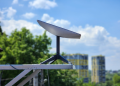
The Cybercab is Tesla’s two-seat robotaxi without a steering wheel or pedals, CarSauce explains. It cites US outlet Teslarati reporting that Cybercabs giving public rides in Dallas have a flush-mounted Starlink terminal on the rear hatch.
TeslaNorth adds two further pointers: newer vehicles photographed at Giga Texas, Tesla’s factory in Texas, had a darker cover on the rear hatch, and Tesla’s Cybercab subscription terms state that vehicle connectivity may include satellite service. Neither outlet reports Tesla confirming how that hardware would be packaged for other models.
What it might cost
Neither report gives a price, and Tesla has published none. For scale, Starlink’s own US service plans list Residential service at $120 a month and the standard kit at $349, while Roam — the mobile tier intended for use away from a fixed address — is listed from $50 a month for 50GB, rising to $165 a month for unlimited data. A car plan has not been announced at any of those tiers, and nothing in either report indicates whether built-in service would be bundled with a vehicle, sold as a separate subscription, or priced like Roam.
The Tesla–SpaceX overlap
Starlink is the satellite internet service operated by SpaceX, the rocket and satellite company Musk also leads, so selling it through Tesla’s much larger non-Cybercab lineup would route vehicle revenue to a second Musk business — one whose finances may soon be formally joined to Tesla’s. Yahoo Finance, republishing Investing.com, reported on 4 November that Tesla and SpaceX have each formed special committees, with Musk saying a combination has “a lot of merit” but with “no guarantee” of a deal. Analysts already treat the network as the bulk of SpaceX’s worth — Morgan Stanley puts $118 a share of its $300 SpaceX target on Starlink. Neither outlet covering Musk’s reply connects the car plan to those talks.
Frequently Asked Questions
Could existing Tesla owners have Starlink hardware fitted to their cars?
Neither Musk nor Tesla has addressed retrofits. Both CarSauce and TeslaNorth report that whether cars already on the road could be upgraded has not been detailed.
Can Cybercab passengers in Dallas use the Starlink connection today?
Apparently not yet. CarSauce cites US outlet Teslarati reporting that riders in the Dallas Cybercabs do not yet appear able to connect to the terminal fitted to the vehicle.
How do Teslas get online now?
TeslaNorth reports that Tesla’s existing connectivity plans run on cellular data and Wi-Fi for services such as navigation and streaming, and that satellite service would mainly add a path online where cell coverage is weak.
Is unsupervised Full Self-Driving available to owners yet?
No. TeslaNorth reports that the FSD v15 update now reaching owners still requires an attentive driver. CarSauce notes that FSD (Supervised) launched in Australia in 2025, but that unsupervised FSD is not available to Australian owners.