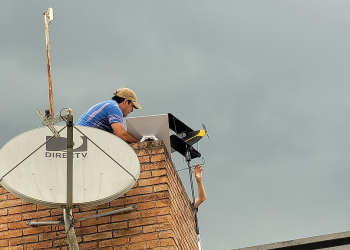
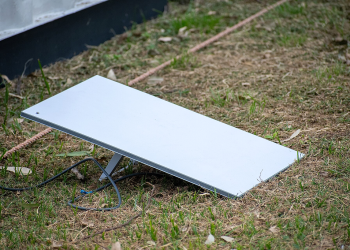
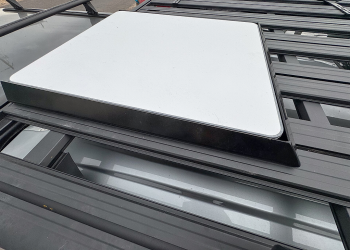
Reliance Industries, the Indian conglomerate controlled by Mukesh Ambani, is in talks with satellite manufacturers, technology startups and industrial groups to build a 1,600-satellite broadband network that would give India its own alternative to Elon Musk’s Starlink, Bloomberg reported on 18 November 2026. Reports published the same day by the Free Press Journal and Billionaires.Africa say the plan leans on imported hardware from the United States and Europe, and rules out buying from China.
Key facts
- Size and orbit: 1,600 satellites flying at about 650 kilometres, with 23 ground stations proposed across India, according to Billionaires.Africa.
- Sourcing: at least 400 satellites from the US, with two American companies in talks and European suppliers under evaluation; China is not being considered.
- Funding offer: Reliance has offered to pay for the manufacturing infrastructure needed to scale up Indian production.
- Supply gap: India builds fewer than 15 satellites a year; the network would need roughly 200 a year, the Free Press Journal reports.
- Timeline: a test mission in September 2027, wider deployment from early 2028, full network by 2035 — five years later than an earlier 2030 target.
- Status: still at the planning stage, and not publicly confirmed by Reliance.
Why it matters
The proposed constellation would be built against an operator that is already running at scale. Billionaires.Africa reports Starlink operates more than 10,000 satellites, serves at least 13.6 million customers worldwide and generated more than $5 billion in connectivity revenue in the three months to September 2026. The International Business Times puts the service in more than 160 countries with over 12 million customers. The two totals cannot be reconciled from the reporting itself: the 13.6 million figure is the one published on 18 November 2026 alongside the quarterly revenue to September, while the International Business Times account does not date its customer count.
The prize is a market neither side can sell into yet. The International Business Times cites a Deloitte forecast valuing India’s satellite broadband market at about $1.9 billion by 2030, and notes the country’s rural, poorly connected interior is the kind of territory Starlink was built for.
What Reliance is reportedly building
The low-Earth orbit network is intended to strengthen the connectivity business of Jio Platforms, Reliance’s telecom and digital arm, which Billionaires.Africa says recently listed on Indian stock exchanges. The Free Press Journal reports it would provide an Indian-controlled satellite communications system, primarily improving domestic broadband while potentially supporting strategic communications during geopolitical emergencies.
Jio has filed with the International Telecommunication Union, the United Nations telecoms body, for the orbital resources the network needs, according to Billionaires.Africa. It already runs a satellite joint venture with SES, the Luxembourg-based satellite operator.
Manufacturing is not the hardest part
Industry executives quoted by the Free Press Journal believe deployment could prove more difficult than manufacturing, with India also needing adequate launch infrastructure and access to suitable orbital slots. Both reports attribute the slip in the completion target from 2030 to 2035 to manufacturing and launch capacity limits. Neither report gives a reason for excluding Chinese suppliers.
Related coverage on this site: the gap between building the satellites and getting them into orbit, and China’s own Starlink rival, Qianfan.
The spectrum fight behind the rivalry
Commercial satellite broadband in India is still waiting on airwaves. Billionaires.Africa reports that Jio Satellite Communications, Eutelsat OneWeb and Starlink all hold Indian satellite internet licences, but service awaits spectrum allocation, and that the government chose to assign satellite spectrum administratively rather than auction it — a method Jio had opposed. Because no provider has begun selling, none of the reports quote Indian consumer pricing or a service start date. We reported earlier that India is still finalising the satellite spectrum rules Starlink needs.
The International Business Times reports that Reliance pushed New Delhi to auction the spectrum, arguing administrative allocation would let foreign players sidestep costs domestic firms had already swallowed, and that Jio has spent roughly $19 billion on traditional airwave auctions. Telecom minister Jyotiraditya Scindia defended the administrative route as widening consumer choice, the outlet reports, clearing a path for Starlink and Amazon’s Kuiper.
A public row, and a signed deal
According to the International Business Times, Musk escalated the delay into a personal attack, accusing unnamed “oligarchs” of a monopolistic chokehold over Indian consumers and asking his followers on X: “Is Ambani the real boss of India?” The outlet notes Jio Platforms signed a deal in March 2025 to stock, install and sell Starlink kit across its retail network, pending government approval, with Bharti Airtel striking a near-identical arrangement the same week — and that both are separate from the spectrum question.
India’s Ministry of Communications rejected claims of discrimination, saying Starlink, Eutelsat OneWeb and Jio Satellite Communications were all at broadly the same point, each undergoing security assessments, the outlet reports. Starlink won a Global Mobile Personal Communication by Satellite licence from the Department of Telecommunications in June 2025, valid for 20 years, followed by clearance from space regulator IN-SPACe; what remains is spectrum assignment and a security sign-off.
The plan also sets Ambani against Sunil Bharti Mittal, the Bharti Airtel founder whose family holding company is a major shareholder in Eutelsat Communications, owner of the roughly 650-satellite OneWeb network. Billionaires.Africa reports Mittal said this week that countries cannot rely on another country for satellite connectivity.
Frequently Asked Questions
Who would actually launch the Reliance satellites?
According to Billionaires.Africa, citing Bloomberg, Jio has held talks about launch services with the Indian Space Research Organisation, the private Indian launch firm Skyroot Aerospace and SpaceX. No launch contract has been reported as signed.
Can anyone buy Starlink in India right now?
No. Billionaires.Africa reports that spectrum has not been allocated, so none of the three licensed providers can sell service yet. None of the reports quote an Indian launch date or consumer pricing.
Would the Reliance constellation serve customers outside India, such as in Africa?
The Free Press Journal reports that, unlike Starlink’s global constellation, the proposed Reliance system is expected to focus largely on India’s domestic requirements, with possible strategic communications use during geopolitical emergencies. The sources describe no plans for service in other regions.
Has Reliance confirmed the 1,600-satellite plan?
No. The Free Press Journal reports the project remains at the planning stage and that Reliance has not publicly confirmed the reported details. The International Business Times also reports the conglomerate did not respond to requests for comment on Elon Musk’s criticism.