Tesla is preparing its Starlink-equipped Cybercab robotaxi for a public debut, with what the outlet calls notable changes, according to a report published on 18 November by Teslarati, an electric-vehicle news site. The fullest published account of what SpaceX’s satellite network is doing inside the two-seater comes from an analysis carried by Yahoo on 28 October, which said Tesla has put Starlink in every car in its driverless ride-hail fleet in Austin, Texas.
Key facts
- Teslarati reported on 18 November that Tesla is gearing up the Starlink-equipped Cybercab for a public debut.
- The Yahoo analysis said Starlink is fitted in every robotaxi in the Austin fleet, and that the cars are, in its assessment, still being watched remotely rather than running unsupervised.
- Neither report publishes the terminal, data plan or price behind the install.
- The Cybercab joined the Austin fleet on 3 September, according to Yahoo; the most recent dated count of Starlink-equipped cars in Texas is 544 on 27 October.
- Tesla told analysts on its third-quarter 2026 earnings call that Cybercab service would launch in Dallas the following month, Tesla North reported.
What Starlink is doing in the robotaxi
The connection matters because of how robotaxis are staffed. The Yahoo analysis explains that remote supervision — a person watching the car drive, with commands such as emergency stop and pull over — wants a decent data connection, while remote assist, where the car asks a human for help after stopping, can run over a poorer, higher-latency link from anywhere in the world. Yahoo identifies remote driving as something only Tesla does among the operators it lists. A satellite link that travels with the vehicle is one way to hold up the live video feed those first two modes depend on where terrestrial cellular coverage is patchy or congested.
That is the technical case for low Earth orbit rather than a geostationary satellite: as our explainer on how Starlink delivers broadband from low Earth orbit sets out, the satellites fly at roughly 550km, which keeps round-trip latency far lower than traditional satellite broadband. It is the same pitch SpaceX has used to move into moving vehicles elsewhere, including aviation, where United says Starlink now flies on half its daily flights.
What the reports do not say
- Which antenna or terminal Tesla fits to the cars.
- What bandwidth or latency the fleet actually gets.
- Whether Starlink is the primary link or the cars fall back to cellular.
- Which service tier covers a fleet install of this kind, and what it costs.
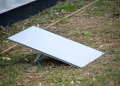
SpaceX’s published availability and pricing cover consumer residential and roaming service — sold as a monthly subscription plus a one-off hardware charge, across a coverage map that includes Texas — alongside business, maritime and aviation plans. No automotive fleet plan is listed. Without those details it is not possible to say from the public record whether Starlink is carrying live remote supervision or filling coverage gaps behind a cellular link.
What Yahoo says about “unsupervised”
Tesla declared its Austin operations unsupervised in January 2026 after offering rides with no Tesla employee in the car, Yahoo reported. The analysis argues the likelier position is that every Tesla robotaxi still has a full-time or near full-time employee watching remotely, able to trigger an emergency stop. It stresses this is not a criticism: it says Waymo, Cruise, Zoox, May, Nuro, Aurora and Chinese operators all began the same way, and that Tesla’s pilot would need fewer staff than earlier deployments. Yahoo also notes that when Elon Musk announced the milestone he specified “in the car”, and that Tesla’s language changed within a day.
Yahoo draws a contrast with operators that have moved past that stage. Executives at Waymo, Zoox and Aurora confirmed to it directly that their vehicles are no longer watched full-time. Remote assist, by contrast, is universal: Yahoo said every operator uses it, Tesla and Waymo included, and that Waymo has reported roughly one remote assist operator for every 30 cars. That ratio is the staffing level a fleet reaches once the live video watch is dropped — and the thing a travelling satellite link is needed for before it is.
How many Starlink-equipped Cybercabs are there?
Four numbers are in circulation, and they count different things.
CNBC put Texas authorisations at 169 Cybercabs plus 420 Model Y robotaxis as of 2 October. It cited Texas Department of Motor Vehicles public records. That is the narrowest measure, covering only vehicles cleared for commercial use, and the only one tied to a named official source.
A trackback carried on Tesla North’s page cites 544 Cybercabs and 507 Model Ys on 27 October. That was the first time the two-seater made up more than half the state fleet. Those are registrations, not authorisations.
Yahoo, on 28 October, gave 319 registered Cybercabs. It added an in-text update to 573 that it does not date, which makes it the least usable of the counts.
The same Yahoo analysis said reports suggest Tesla has built more than 2,300 Cybercabs in total. That is a production figure, not a fleet figure, and Yahoo attributes it to unnamed reports rather than records. It sits well above the other counts because a car can be built without being registered in Texas, let alone cleared to carry passengers there.
On the evidence available, 544 is the most recent dated count of registrations and 169 the most recent audited count of cars authorised to carry paying passengers. The gap between them is registration versus authorisation, not a contradiction. Tesla publishes no fleet number of its own.
Supply is not the constraint. Vehicle engineering chief Lars Moravy told Munro Live that “we don’t run every day because the line can run so fast, it’s currently outpacing our deployments,” Tesla North reported on 26 October, calling it a race between manufacturing and deployment with manufacturing ahead.
The Dallas plan
Tesla told analysts on its third-quarter 2026 earnings call that Cybercab service would launch in Dallas the following month, according to Tesla North — a November window that is now closing. Tesla has not published a start date, a fleet size for the city or a service area, and the company’s public commitment remains that single remark on the call. Teslarati’s 18 November report of a public debut arrives inside that window, but does not tie the debut to Dallas or name a venue.
Austin’s first months and the regulators
What passengers reported
CNBC reported mixed reviews from paying passengers after the 3 September launch, including long waits, pickups and drop-offs in the wrong place and trouble with the butterfly doors or trunk. Austin resident Ethan McKanna, who built RobotaxiTracker.com, told CNBC wait times were often 45 minutes or more at first and have since come down. No significant safety incidents or collisions involving a Cybercab had been reported in Austin since the debut, CNBC said.
Regulators and public opinion
The National Highway Traffic Safety Administration opened what CNBC calls an audit query after launch to check federal safety compliance, and Tesla obtained an extension past a 30 September deadline. Austin Fire Captain Matt McElearney told CNBC he wants rules letting public safety staff move, steer or shut down a vehicle with no controls. Surveys for the Electric Vehicle Intelligence Report found 50% of US respondents would not feel comfortable in a robotaxi without a steering wheel or pedals, and 70% wanted rides paused on hearing of the NHTSA inquiry.
Starlink’s reliability case is being tested elsewhere too
The Cybercab install lands while SpaceX is arguing the same reliability case to another safety-critical customer, with a less favourable result. US Transportation Secretary Sean Duffy says the FAA chose a ground network over Starlink for air traffic communications after hitting problems in lab testing, and that Musk is unimpressed — a reminder that how a satellite link performs when a human needs it in real time, which is precisely what remote supervision asks of it, is still being judged case by case.
Frequently Asked Questions
How big is Waymo’s authorised fleet in Texas?
CNBC reported that as of 2 October, Waymo had 1,154 autonomous vehicles authorised for commercial use in Texas, including 359 of its new Ojai models. CNBC added that Waymo was running more than 500,000 paid rides a week and had over 4,000 driverless vehicles in US commercial operation.
Does Tesla answer questions about the robotaxi programme?
The analysis carried by Yahoo on 28 October said Tesla no longer responds to press queries, taking questions mainly on X and from selected analysts on earnings calls.
Do Cybercab passengers get to use the Starlink connection?
Neither Teslarati’s 18 November report nor the Yahoo analysis says what, if anything, riders can do with the link. Both frame it as connectivity for the driverless system rather than an onboard Wi-Fi amenity.