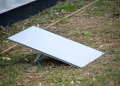
US Transportation Secretary Sean Duffy said the Federal Aviation Administration (FAA), the agency that runs American air traffic control, ran into technical problems when it tested an earlier version of Starlink in a laboratory. He made the comments at a press conference on November 17, four days after a communications failure stopped departures across the United States, according to a Moneywise report carried by Yahoo Finance.
Key facts
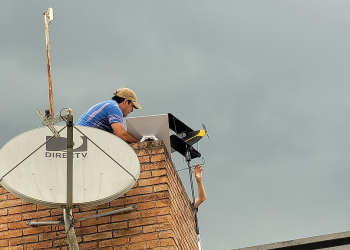
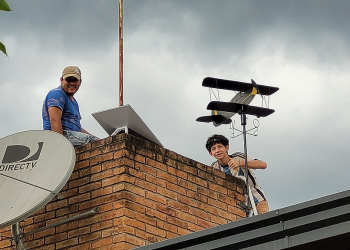
- Duffy said the FAA has used Starlink, SpaceX’s satellite internet service, in parts of US airspace, and praised its speed, but said the agency hit technical problems with an earlier version in a lab test (Moneywise).
- “We thought that the best method is to have a network that’s based on the ground,” Duffy said, citing air traffic control equipment spread across the country (Moneywise).
- The November 13 ground stop lasted nearly five hours and cancelled about 9,200 US flights on the Friday and more than 6,400 on the Saturday, according to 24/7 Wall St.
- A router at El Dorado, Arkansas sent more than 1,000 connection attempts every four to five seconds, interrupting radio links and radar feeds at 17 of the FAA’s 22 en route centres; a second router in Amarillo, Texas also flooded the network (24/7 Wall St).
- Duffy is now asking Congress for $50 billion to upgrade the system, up from $30 billion (24/7 Wall St).
Why it matters
Duffy’s remarks are the first detailed official reasoning for why the FAA has not taken SpaceX up on a wider Starlink rollout, after Elon Musk’s claim that the FAA turned down free terminals. They also sit alongside a limit set in July 2025, when FAA Administrator Bryan Bedford told lawmakers that no satellite service would be the sole communications technology for safety-critical air traffic, 24/7 Wall St reports.
That limit shapes how much a satellite link could have helped on November 13. The same outlet notes that the FAA describes the failure as a fault inside its own ground network: a backup satellite link helps when a fibre line is cut, but a router flooding the network from the inside would still have to be found and switched off.
What Duffy said — and what is still missing
At the November 17 briefing, Duffy argued that a ground-based network made more sense for the system as a whole because the agency’s equipment is scattered nationwide, and said the lab test of an earlier version ran into technical issues.
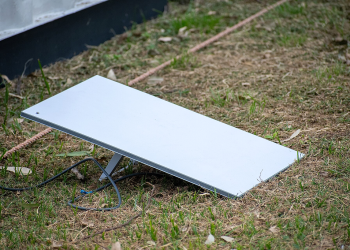
Neither report says what those issues were, which generation of hardware was tested or when the test ran — a reporting gap worth flagging, because that test is the only technical reason the department has put forward for keeping satellites at the margins of air traffic communications. The age of the equipment matters too: an older terminal is not the service SpaceX sells today, and readers judging how much has changed can see how Starlink’s dishes and low-orbit satellites work.
Duffy also said he wants to move away from contractor L3Harris Technologies, the US defence and communications supplier that built the ageing system, but cannot simply cancel the contract because L3Harris owns the network.
What triggered the ground stop
Duffy linked the November 13 stop to an upgrade at El Dorado, where an L3Harris crew was replacing old copper lines with fibre-optic cable, Moneywise reports. The FAA said its network received roughly 1,000 requests to connect in four to five seconds and that older equipment struggled with the traffic, disrupting the radios and radar controllers rely on. The agency paused departures nationwide as a precaution.
On the Saturday, Duffy said the FAA was still investigating whether the contractor’s work or a faulty router was to blame — a question that remained open when Musk intervened.
An unconfirmed offer
Three days after the ground stop, Musk wrote on X: “Free Starlinks for FAA were offered to Sec Duffy, but he said they were not needed. As it turns out, they were.”
24/7 Wall St stresses that the offer and the refusal are Musk’s claim alone, with no terms, scope or date disclosed, and that Duffy, the Department of Transportation (DOT) and the FAA had not confirmed it. The outlet said the DOT had not publicly replied as of the Monday. Moneywise, however, reports that the US DOT gave it a statement describing Starlink as one of the “innovative approaches” it is using on what it called a decaying air traffic control system, pointing to the Alaska deployment rather than addressing the refusal directly. The two accounts therefore differ on whether the department has responded.
Musk first blamed Verizon, the US telecoms operator, before clarifying that L3Harris had built the ageing system and that Verizon’s replacement was still offline, according to 24/7 Wall St.
The money behind the fight
Behind an argument over free terminals sits a far larger sum. Duffy said in July 2025 that more than 90% of the telecoms money would go to replacing copper with fibre, work that benefits the existing contractors, 24/7 Wall St reports. Congress gave the FAA $12.5 billion last year, but House Democrats Rick Larsen and Andre Carson said only $1 billion has been spent. That backdrop frames the FAA’s $50bn funding request.
Whichever way Duffy settles the satellite question decides who spends that money, which is why the incumbents’ numbers are large enough to move on a policy signal rather than an earnings report. L3Harris runs the FAA’s Telecommunications Infrastructure programme and holds a record $53.2 billion backlog, the outlet says; Verizon’s FAA contract is worth $2.4 billion. On the day covered by the report, L3Harris shares fell 3.91% to $261.70, Verizon finished flat at $46.36 and SpaceX stock closed at $137.36, down 1.26%. 24/7 Wall St says no source ties either contractor’s share move to Musk’s post, and advises watching for a DOT or FAA statement confirming or denying his account.
Frequently Asked Questions
Where has the FAA actually used Starlink equipment?
According to 24/7 Wall St, the FAA tested free SpaceX terminals in early 2025 in Atlantic City and at two non-safety-critical sites in Alaska. The US Department of Transportation told Moneywise that Starlink was deployed in Alaska, often in extremely remote areas, to help power critical new weather systems earlier last year.
Was the November 13 ground stop caused by a cyberattack?
No. 24/7 Wall St reports that officials found no sign of a cyberattack, and that Juniper, the maker of the router involved, said the device worked as it had been configured.
When did Musk first push Starlink terminals on the FAA?
Moneywise says Musk had been making the case since February 2025, when he wrote on X that SpaceX was sending terminals to the FAA on an emergency basis at no cost to the taxpayer because the situation was "extremely dire". 24/7 Wall St notes Musk quote-posted his own February 27, 2025 message alongside his latest claim.