Elon Musk said Tesla hopes to offer built-in Starlink satellite internet in more of its vehicles “hopefully available towards the end of next year,” in a reply on X to former PayPal president David Marcus, who had called for an embedded Starlink option in every Tesla rather than only the Cybercab. The exchange was reported on 23 November 2026 by EVXL, which dated Musk’s posts to the evening of Sunday 22 November, and by CarSauce, which dated them to 23 November.
Key facts
- Musk’s late-2027 timing is an aspiration, not a confirmed launch schedule, CarSauce says.
- Musk added a single exclusion: “Except in China, as Starlink is illegal there.”
- Tesla has not named which vehicles would get the feature, nor disclosed pricing, subscription arrangements or hardware specifications, both outlets report.
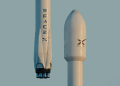
- Starlink is the satellite internet service operated by SpaceX, the rocket company Musk also leads, CarSauce notes.
- Tesla’s existing paid tier, Premium Connectivity, was listed at $9.99 a month or $99 a year plus tax on the company’s support page as of 23 November, according to EVXL.
Why it matters
Musk framed the expansion around passengers rather than the car itself. “This will be important for unsupervised FSD, so passengers have high bandwidth everywhere for work and entertainment,” he wrote, in a quote carried by both outlets. CarSauce notes he did not detail how the driving system itself would use the connection.
EVXL points out that Premium Connectivity runs on the car’s cellular network, so it does not help where there is no mobile signal, and describes that as the gap Starlink would fill — drivers in remote areas who need a connection but have no coverage.
Only one Tesla has the hardware today
The Cybercab, Tesla’s two-seat robotaxi built without a steering wheel or pedals, is the only Tesla carrying Starlink hardware so far, both outlets report, and every Cybercab already carries the hardware.
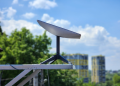
Tesla investor Sawyer Merritt, who summarised the X exchange, wrote on Sunday that Cybercabs operating in Dallas already have the equipment but added that “although it doesn’t seem like riders can connect to it yet,” per EVXL. CarSauce cites the US outlet Teslarati reporting the same thing on Cybercabs giving public rides in Dallas, describing a flush-mounted terminal on the rear hatch.
What is still unknown
Neither outlet could establish a model list. EVXL says Musk did not name which vehicles get Starlink next, did not give a price for the add-on and did not say whether cars already with customers can get it; CarSauce likewise reports that retrofit availability has not been detailed.
EVXL raises two possibilities for how buyers would pay — an additional monthly charge on top of existing connectivity, or inclusion in the vehicle’s purchase price — while noting that neither has been confirmed. For context on what SpaceX charges households, see our rundown of Starlink’s consumer pricing; no equivalent figure exists for the in-car product.
Background: an older promise, now with a date
The idea predates Sunday’s post. EVXL reports that on 9 August 2026 Musk said “All cars will have Starlink in the future,” with no date attached, and that Tesla showed the first Cybercab with Starlink built in that same month. The late-2027 window is the first timing he has put on the wider rollout, roughly 13 months out from the post, EVXL notes.
EVXL also reports Musk saying FSD V15 goes wide in December, and that Tesla plans a Model Y without a steering wheel as a separate vehicle from the Cybercab.
Country limits: China and Australia
China is the one market Musk ruled out. EVXL says built-in Starlink will not be able to come to Teslas there unless the country makes the service legal.
CarSauce, reporting for Australian readers, says Tesla Australia has not commented on Starlink integration and no local launch timing has been announced. It notes that Starlink already operates in Australia and is widely used in regional areas where mobile coverage is patchy, so built-in satellite internet could offer another connectivity option on regional roads with unreliable reception — though the coverage and capabilities of the proposed Tesla integration have not been detailed.
Where the sources differ
The two reports agree on the wording of Musk’s posts and on what remains unanswered, but not on the date: EVXL times the first reply to 8:15 p.m. ET on Sunday 22 November and the China follow-up to 8:37 p.m., while CarSauce places the exchange on 23 November 2026. Both attribute the quotes to Musk’s own posts on X.
Frequently Asked Questions
How much would 13 months of Tesla’s existing Premium Connectivity cost?
EVXL calculated that paying the $9.99 monthly rate for the roughly 13 months between Musk’s post and the end of 2027 would come to $129.87 before tax. That is Tesla’s current cellular-based tier, not a Starlink price, which has not been announced.
What does Tesla’s free connectivity tier include?
According to EVXL, citing Tesla’s connectivity support page, Standard Connectivity is free for eight years after delivery and runs most features over Wi-Fi. The paid Premium tier adds music streaming, satellite-view maps and live traffic over the car’s cellular connection.
What is the difference between unsupervised FSD and FSD (Supervised)?
CarSauce explains that unsupervised FSD means operation without a driver supervising, while FSD (Supervised) requires driver attention and readiness to take over. EVXL reports Musk said FSD V15 goes wide in December but is still supervised.
Is built-in Starlink coming to Teslas in Australia?
CarSauce reports that Tesla Australia has not commented on Starlink integration and there is no Australian launch timing. The local range comprises the Model 3 and Model Y, including the six-seat Model Y L, and unsupervised FSD is not available to Australian owners.